The Science of Language: Why Comprehension Always Comes First
EL Knowledge Management Team
2025-02-07
2025-02-07
Language is the fundamental operating system of the human brain. It is the tool that allows us to progress from Foundational Literacy and Numeracy (FLN) to abstract, critical thought. Understanding this journey, and the sequence in which skills develop is paramount for educators aiming for student mastery, not just compliance.
1. The Foundation: From Oral Language to Decoding (L1)
Language acquisition begins with Comprehension. Well before a child ever sees a letter, they build a robust understanding of language through listening and speaking. The first stage of formal learning focuses on introducing basic literacy skills, often rooted in the child's first language (L1). This stage is not about speed; it's about building a solid base of sounds, simple sentences, and foundational vocabulary.
The goal is to move the child from being a competent listener and speaker to a competent decoder, someone who can connect sounds (phonemes) to letters (graphemes). This initial proficiency in L1 is vital because it ensures the child achieves conceptual clarity in their most familiar language before adding complexity.
2. Bridging Languages and Building Vocabulary
Once the foundation in L1 is established, the learner is ready to tackle L2 (Second Language) acquisition. Research on Multilingual Education (MTB-MLE) shows that the strongest path involves a gradual, scaffolded transition from L1 to L2, deliberately using the robust conceptual framework the child already possesses. This practice validates the child's identity while providing a solid bridge to bilingual skills.
Simultaneously, a successful language program targets massive vocabulary expansion. Achieving a milestone of more than 200 essential, high-frequency words is a critical benchmark for effective communication and comprehension in the classroom. Expanded vocabulary reduces the cognitive load during reading, freeing up mental energy for deeper analysis.
3. The Goal: Reading to Learn and Thinking Skills
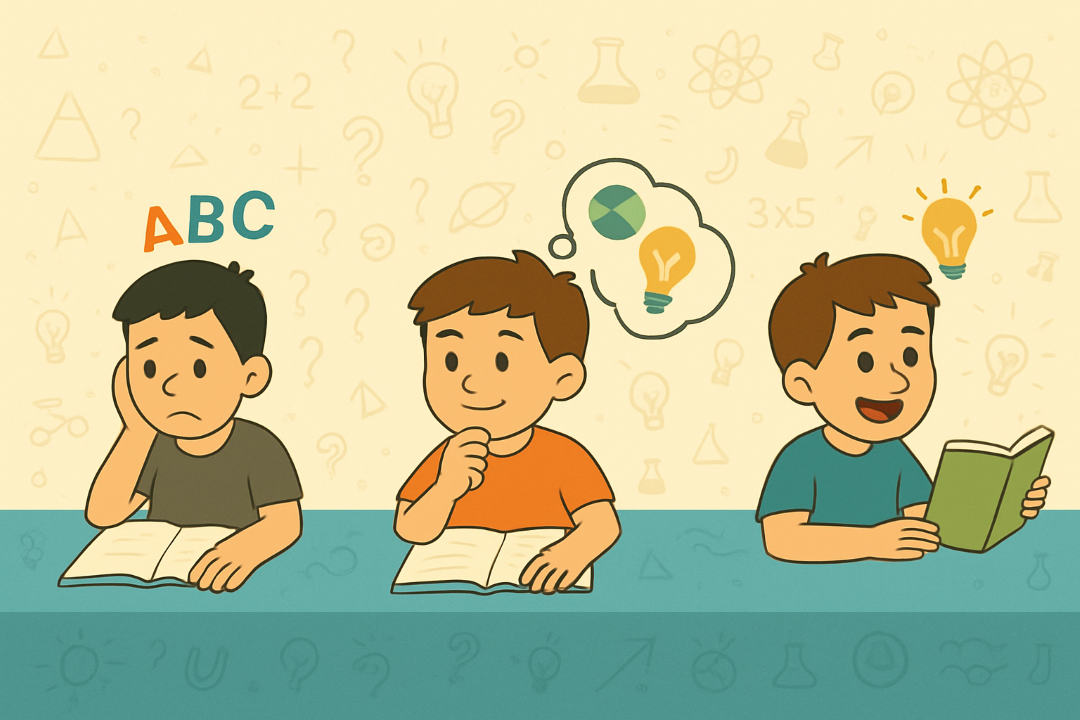
The entire foundational process is designed to propel students from "learning to read" to "reading to learn." Once a child can decode, comprehend, and has sufficient vocabulary, the instructional focus shifts to developing Thinking Skills. This involves exercising critical thinking and problem-solving abilities through advanced language exercises, such as analysis, synthesis, and evaluation.
Beyond academic proficiency, language development is deeply tied to personal development. Writing, in particular, becomes a powerful tool for self-discovery and character growth. As learners progress, they are encouraged to become authors in their areas of interest, expressing themselves in a variety of written and oral ways. This progression—from foundational sounds to confident self-expression- highlights that language learning is the continuous journey of intellectual and personal development.
Further Reading for Educators Mother Tongue Based Multilingual Education: Lessons from the Field (Various Authors): Provides case studies and implementation strategies for successful MTB-MLE programs globally.